 AI
AII asked one simple question, "what is the weather today," to three versions of ChatGPT. I got three completely different answers. Same product name. Three completely different systems underneath. If your marketing assumes everyone sees the same ChatGPT, you are optimizing for a tool that does not exist.
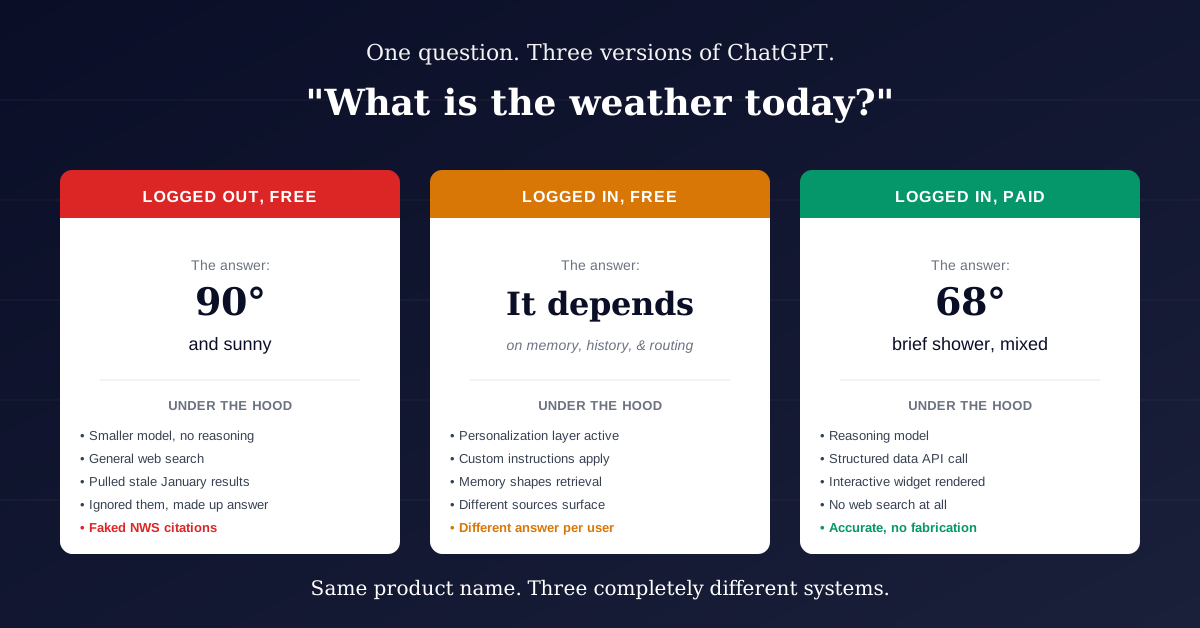
One question, three answers
Logged out, free. It confidently said "90 and sunny." It was wrong. A smaller model with no reasoning ran a general web search, pulled stale results from January, ignored them, made up an answer, and then faked citations to the National Weather Service to make it look sourced. This is the version most of the public uses, and it is the one most likely to invent something and present it as fact.
Logged in, free. It said "it depends." The personalization layer was active: memory, custom instructions, and history all shape what it retrieves, so different users surface different sources and get different answers to the same question. There is no single "what does ChatGPT say about us" here, because it is different for every person.
Logged in, paid. It said "68, brief shower, mixed." Accurate. A reasoning model made a structured data API call, rendered an interactive widget, ran no open web search at all, and fabricated nothing. This is the cleanest answer, and the fewest people see it.
Why this matters for your visibility
Most teams ask "does ChatGPT know us" as if there is one answer. There are at least three, and they pull from different places. You can be represented perfectly in the paid reasoning version and be invisible, or worse, fabricated about, in the free logged-out version that most of your market is actually using. Optimizing for one is like buying a billboard on a road only some of your customers drive.
The free logged-out version is the riskiest of all, because it will confidently make something up about your business rather than say it does not know. If it cannot find clear, structured, trustworthy information about you, it does not go quiet. It guesses.
What to do about it
You cannot control which version someone opens, so you have to give all of them the same clean, machine-readable truth to work from: structured content the models can extract, consistent facts about your business across the web, and trust signals strong enough that the engine reaches for your information instead of inventing its own. When the underlying data is solid, the answer holds up no matter which version your customer is talking to.